
Looking Forward: Reflections After 35 Years in Public Education.
Mar 18, 2026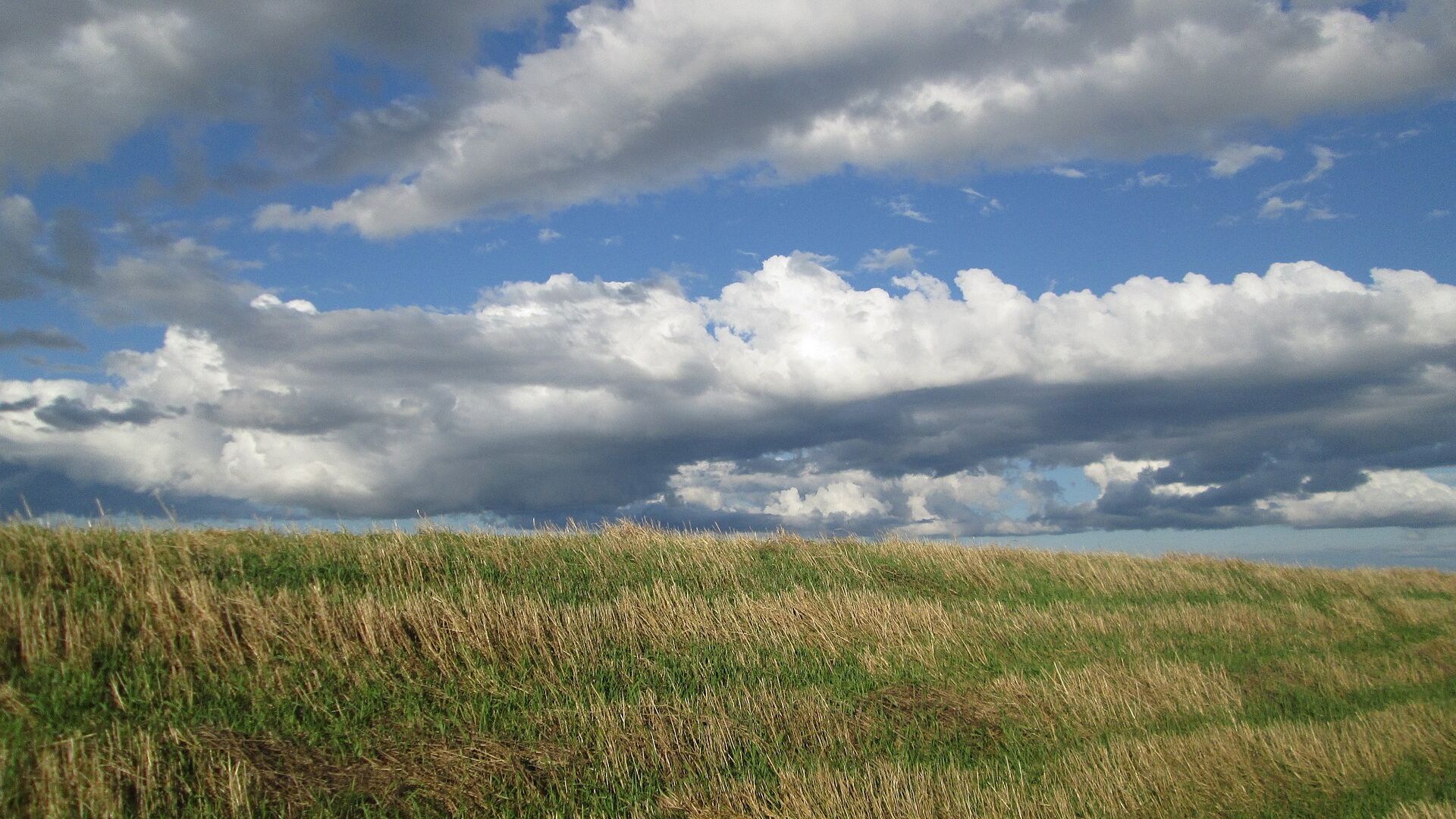
I remember well my first day as a new teacher in September 1991. I had just graduated from Mount Allison University, located on the Tantramar Marshes in Sackville, New Brunswick, near the Nova Scotia border. If you have never driven through, it is a flat grassy expanse that stretches to the horizon with marshlands, river estuaries, and old homestead structures from another time. This land is on the traditional territory of the Mi'kmaq people.
The region has a deep connection to early Acadian settlement. It is a rich history of resilience, displacement, and renewal. As an Acadian myself, that landscape and history have shaped my own personal and leadership identity. The history books describe the relationship between the Acadians and the Mi’kmaq people as one of alliance and cooperation. I would like to believe that this is true. It’s a perspective however, that is a settler perspective and the truth is likely far more complicated.
My first teaching assignment took me to a rural community in eastern New Brunswick, another region of historical Acadian significance. The school was an 8–12 junior secondary school. My assignment was music and band.
On that first day, the staff participated in a provincial workshop called Teacher Wellness. The message was simple: teaching is hard, and you need to take care of yourself. That was nearly 35 years ago. Much has changed since then and yet, the messaging on that first day is perhaps more relevant now than any other time in education.
I want to share three key learnings from that first year that represent themes that have endured in public education over the last three and a half decades.
Lesson One: Informal leadership is real leadership.
In that first year, I quickly learned that teaching is a collaborative practice. It simply can’t be done well in isolation. I was fortunate to find colleagues who offered advice, shared materials, and listened when things didn't go well. Their support was informal, but it was what kept me standing. So much professional growth happens in those everyday conversations in hallways, in the staffroom, and between classes. That is teacher leadership, and it is foundational to a healthy school system.
Lesson Two: Indigenous perspectives.
In that first year, I learned that school looked very different for students of Indigenous ancestry than it did for the rest of the school population. The school was involved in a project aimed at increasing graduation rates for Indigenous students, and it had some success, but the program was isolated. There was very little broader effort to celebrate Indigenous culture across the school. Even then, early in my career, it was clear the system was struggling to serve Indigenous learners in ways that honoured the richness of their history, culture, and knowledge.
Lesson Three: Leadership sets the conditions for everything else.
In that first year, I watched the formal leaders in the school carefully, what they did, how their decisions shaped the culture, how they supported staff. What I observed was through the lens of a first year teacher not really knowing what to expect or even what to hope for. The school had a very formal tone, the administrative team was respected but not connected to staff in a positive relational way. I didn't yet have the language to describe what was missing, but I sensed it could be different. When I moved to the West Coast, I noticed generally that the school leaders I worked with were more relational, but there was a missing instructional presence.
Today, formal educational leadership in schools looks much different than it did 30 years ago. Principals and vice-principals are generally more collaborative, more instructionally aware, and more attuned to the human side of schools. But the role has also become more complex and demanding, and fewer teachers are choosing to pursue it. These positions remain among the most influential in the system. When leadership is strong, schools can navigate almost anything. When it is absent or misaligned, even good teachers struggle to do their best work.
Through Truth and Reconciliation, the school system has begun to embrace Indigenous ways of knowing and learning which is having a transformative benefit. The wisdom, teachings, and culture of Indigenous peoples enrich education for everyone. Despite the progress, there are still far too many jurisdictions where this work is not a priority and harmful and divisive attitudes still exist, even with system leaders. We still have a long way to go. But the shift from isolated programs of the past to something more systemic, is real, and it matters. Working with Indigenous communities and Indigenous leaders has transformed my perspectives both personally and professionally, and I am grateful for this learning.
Nearly 35 years after that first day where I was told teaching would be hard, educator wellness is still front and centre across the country. Teachers and administrators are reporting higher levels of stress than at any point I can remember, particularly since the pandemic. At the time of writing this piece, I came across a CBC article on how public educators in Alberta are facing growing hostilities from parents and communities. This has resulted in some educators choosing not to live in the same community where they work, or only interacting with parents through email and not face to face due to aggressive language and tone. We feel this too in British Columbia. Perhaps not yet to this degree, but it is out there, more than it used to be.
I believe that schools are fundamentally still wonderful, positive places of learning for students. However, we do know that staffing has been very challenging, shortages of teachers and educational assistants are a real challenge, and it is becoming more difficult to recruit formal leaders as interest in these demanding roles isn’t what it used to be.
Looking Forward
Public education is foundational to a healthy and flourishing society. The three things I noticed in my very first year — the power of collegial support, the need for a system that works for every learner, and the critical influence of leadership, are still the pillars of a thriving system.
Policy and system funding matter, but more money is not going to solve our current challenges. After nearly 35 years, my conviction is that public education needs a fundamental rethink, one that will take time, that will require strong shared leadership at every level, and that will require listening seriously to Indigenous wisdom, to student voice, and to one another. The system has been actively resisting transformative change, because we are attached to what we know, what is comfortable, and what is predictable.
Meaningful change in complex systems comes slowly. It comes through relationships, collaboration, and a shared sense of purpose. It looks less like a sweeping policy announcement and more like the quiet, steady work of educators who show up every day and lead from where they are.
I think of the Tantramar Marshes, rich with a power of place stretching to the horizon, shaped over centuries by struggle, conflict, and renewal. Change comes slowly to a landscape like that. But it comes. Public education is in its own period of pressure and uncertainty right now. The path forward isn't always clear. But the capacity for renewal is there, in our teachers, in our leaders, in our students, and in the relationships we build with one another and with the communities we serve.
Author